Choose KSL WPC decking, Creating a life that is close to nature.
Let you really get the feeling of wood
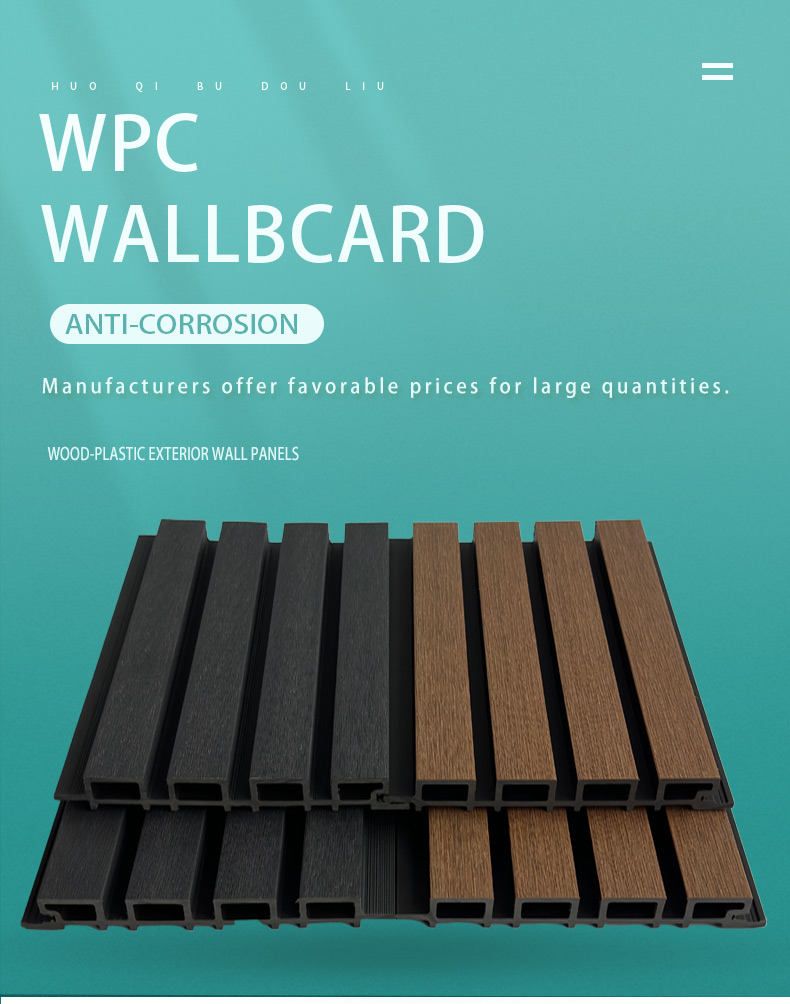
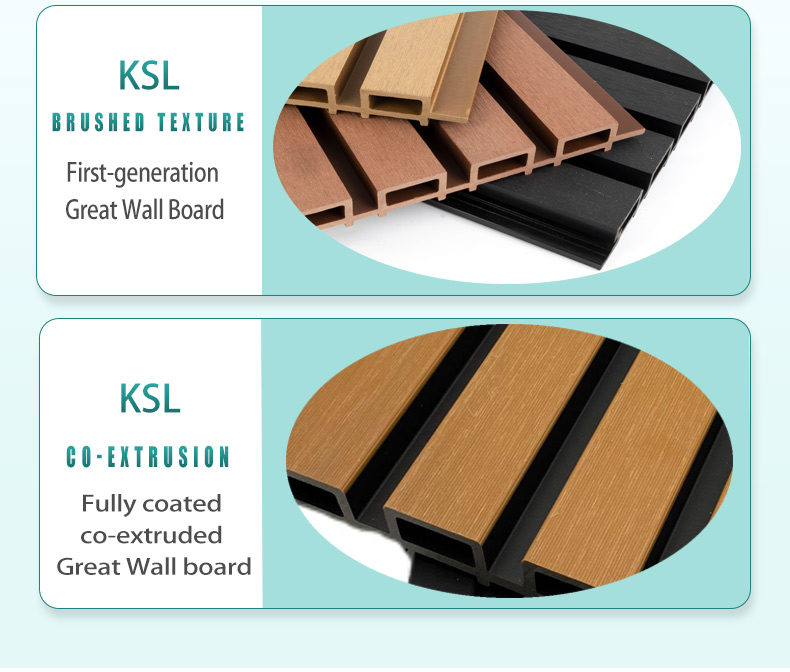
KSL WPC co-extrusion WPC board or second generation WPC. Comparing with the traditional WPC there is protective layer which is modified PE, this protective layer makes the products unparalleled performance and long-lasting aesthetics.
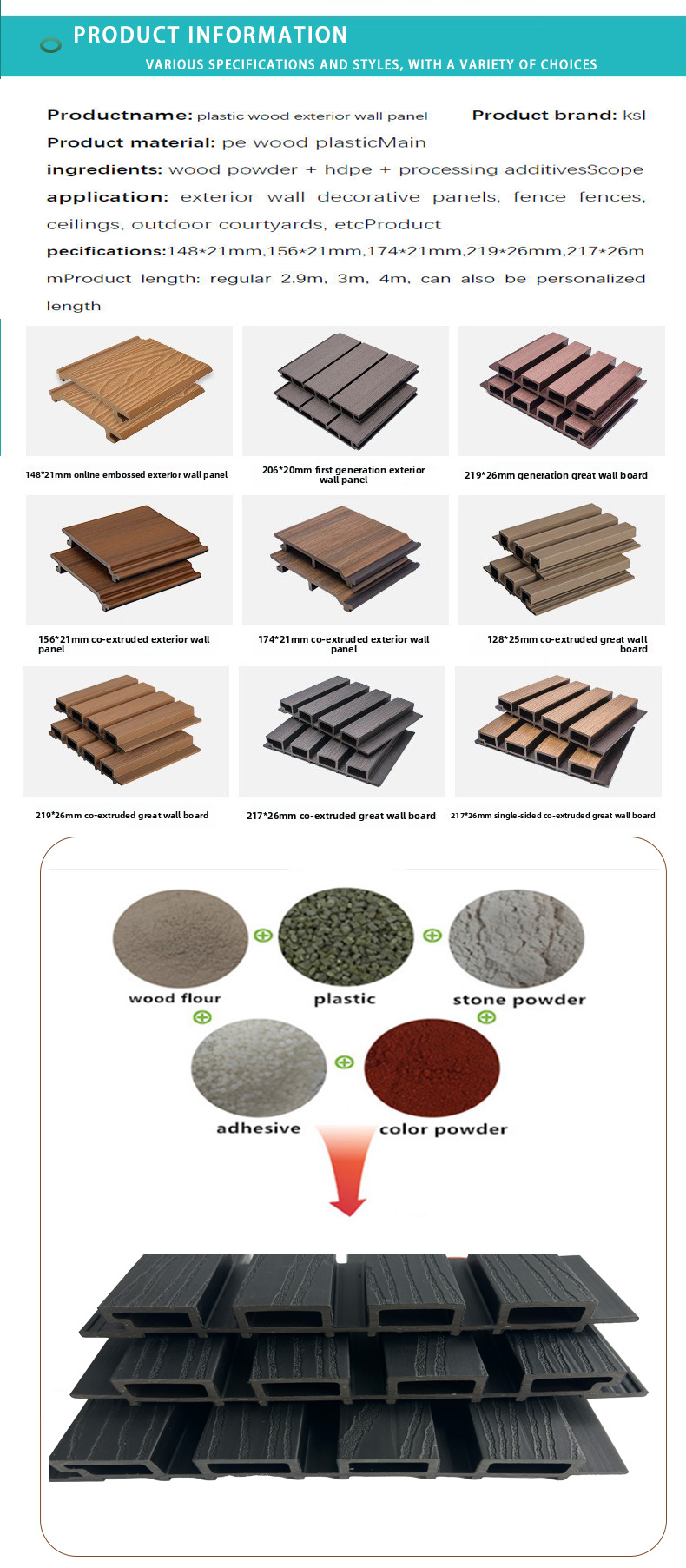
Item No.: KSL-GK26-219A
Board Width: 219mm
Board Thickness: 26mm
Board Length: 2m, 2.2, 2.4, 2.8,2.9, 3m, 3.66m (12ft), 4m, 4.88m (16ft), 5m, 5.8m ect
Specifications |
|
Brand | KSL |
Name | WPC WALL PANEL 219*26mm |
Item model | KSL-GK26-219A |
Size | 26*219mm |
Length | 2m, 2.2, 2.4, 2.8,2.9, 3m, 3.66m (12ft), 4m, 4.88m (16ft), 5m, 5.8m ect |
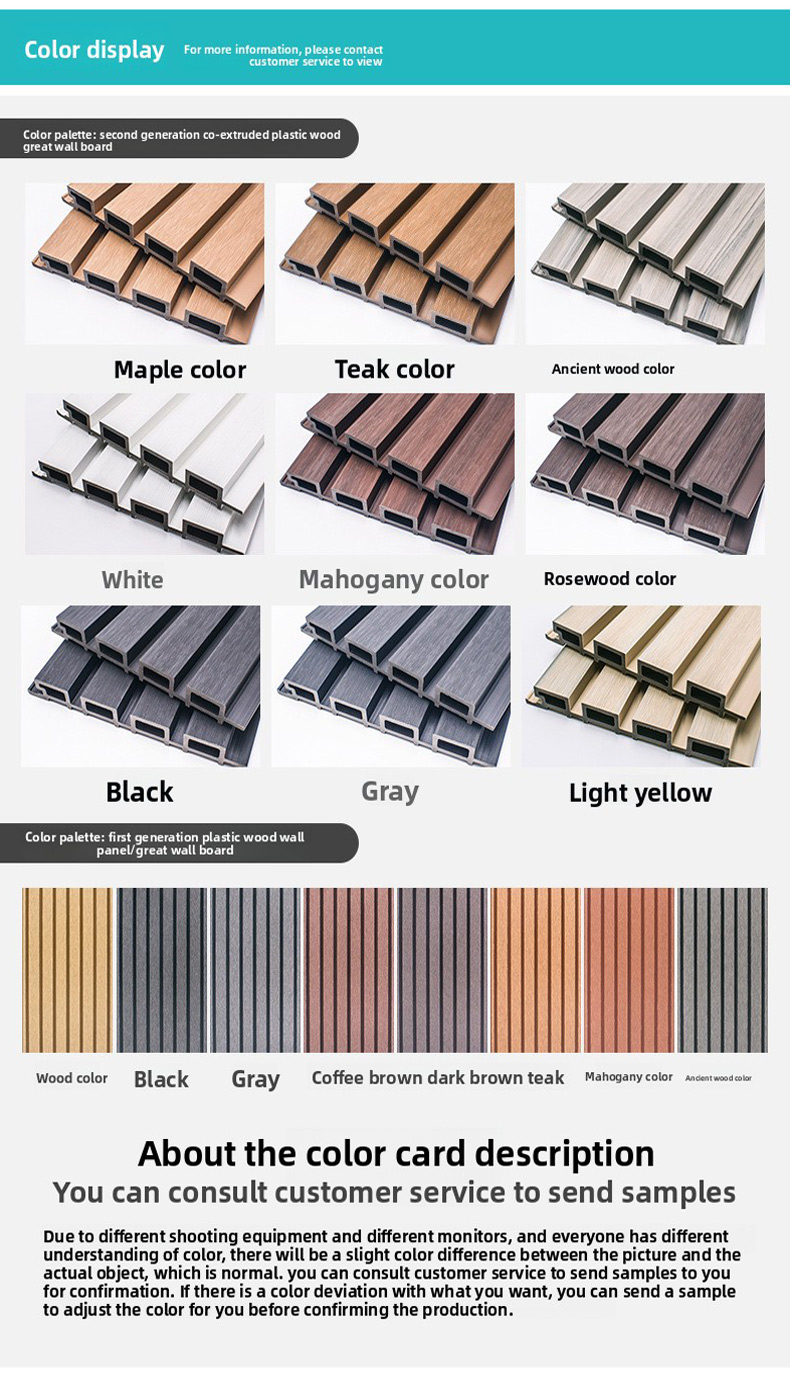
Color | Standard available colors, or customized |
WPC component | 30% HDPE+60% wood fiber + 10% additives |
Accessories | Patented clip-easy system |
Maintenance | Free maintenance |
Warranty | 10 years (You can get more details from KSL team) |
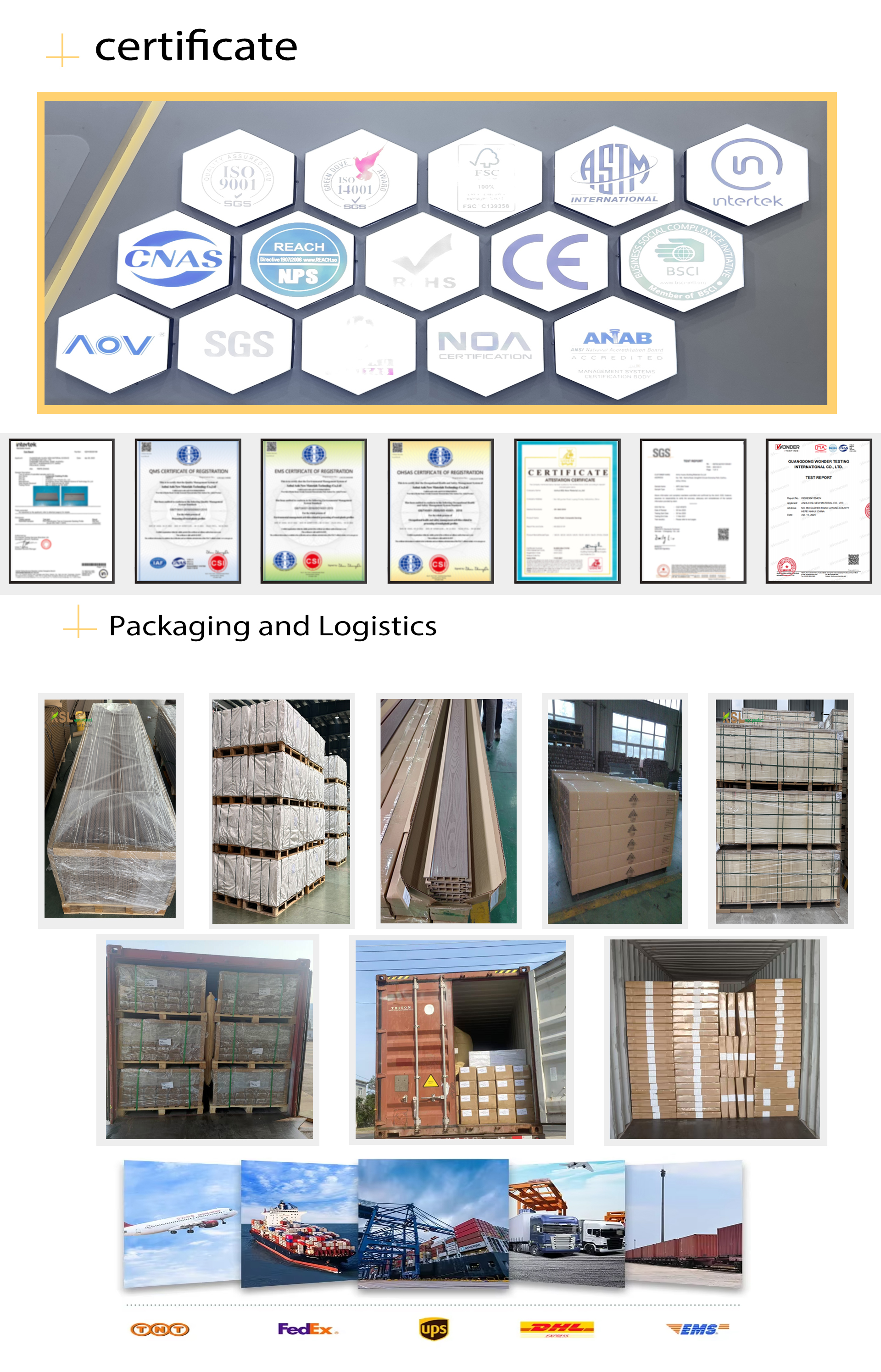
Certificate | CE/ISO9001/ISO14001 |
Recycling | 100% recyclable |
Package | Pallet or bulk packing |
Payment | 30% deposited, 70% see copy of B/L |
Delivery time | 15-20 days for 1*20ft container |
FAQ:
1. What exactly are WPC wall panels, and what materials are they made of?
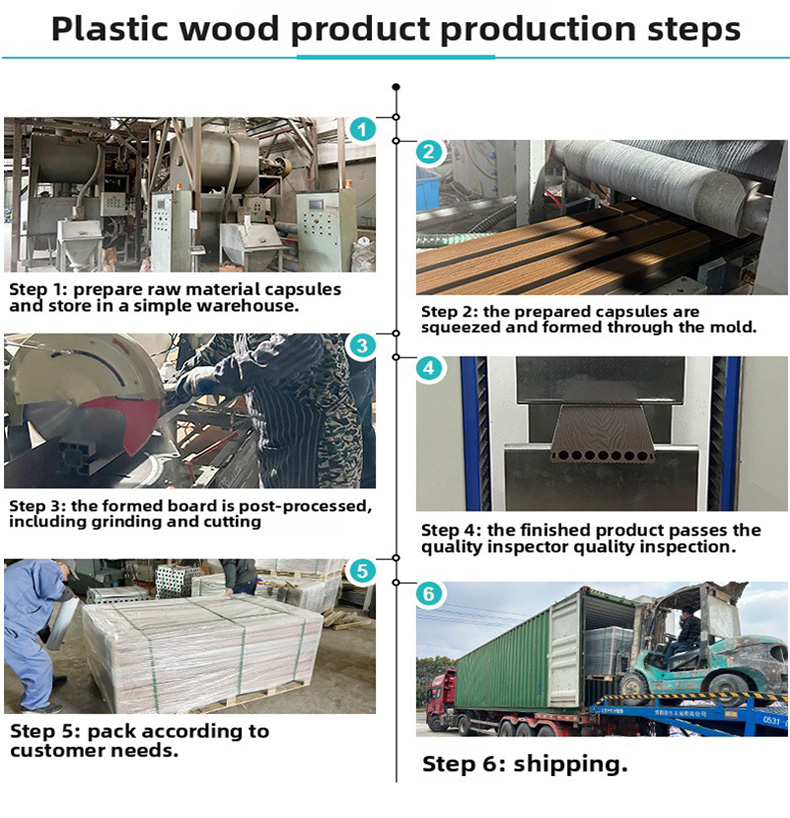
WPC wall panels are a type of eco-friendly building material made by blending wood fiber (or wood flour) (typically from recycled wood scraps, sawdust, or agricultural residues) with thermoplastic resins (such as PVC, PE, or PP) and small amounts of additives (e.g., anti-UV agents, flame retardants, and stabilizers). The mixture is processed via extrusion, molding, or pressing to form panels with the texture of natural wood but enhanced performance.
2. Are WPC wall panels durable enough for long-term use, especially in humid or outdoor areas?
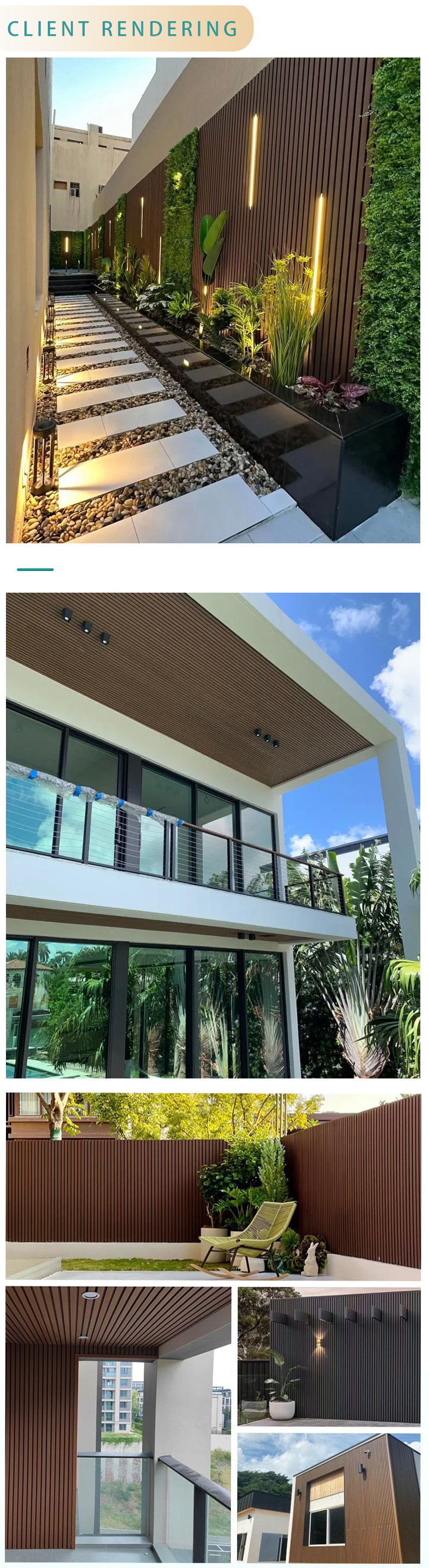
Yes, WPC wall panels excel in durability and are well-suited for both indoor and covered outdoor areas (e.g., porches, balconies). Unlike natural wood, they are waterproof and moisture-resistant—they won’t warp, rot, or mold even in humid environments (e.g., bathrooms, kitchens). Additionally, they are resistant to insects (no termite damage), fading (thanks to anti-UV additives), and impact, with a typical service life of 15–25 years when properly installed.
3. How difficult is it to install WPC wall panels, and can non-professionals do it themselves?
WPC wall panels are designed for easy, DIY-friendly installation, making them accessible to non-professionals. Most panels feature a tongue-and-groove (T&G) locking system—they can be simply snapped together without complex cutting or gluing. Basic tools (a tape measure, saw, drill, and level) are enough for the job. However, for uneven walls or outdoor projects requiring weatherproofing (e.g., sealing gaps), hiring a professional is recommended to ensure long-term stability.
4. What maintenance do WPC wall panels require, and how do they compare to natural wood?
WPC wall panels have minimal maintenance needs, far less than natural wood. For regular upkeep:
Indoor panels: Wipe with a damp cloth or mild soapy water to remove dust/stains (avoid harsh chemicals).
Outdoor panels: Rinse with a garden hose annually to remove dirt (no sanding, painting, or staining needed).
In contrast, natural wood requires frequent sanding, repainting, or staining to prevent rot and fading—saving time and cost with WPC.
5. Are WPC wall panels environmentally friendly, and can they be recycled?
Most WPC wall panels are eco-friendly and sustainable for two key reasons:
They use recycled materials (e.g., waste wood and plastic), reducing landfill waste and the need to harvest new timber.
They are formaldehyde-free (unlike some traditional wood-based panels like MDF), making them safe for indoor air quality.