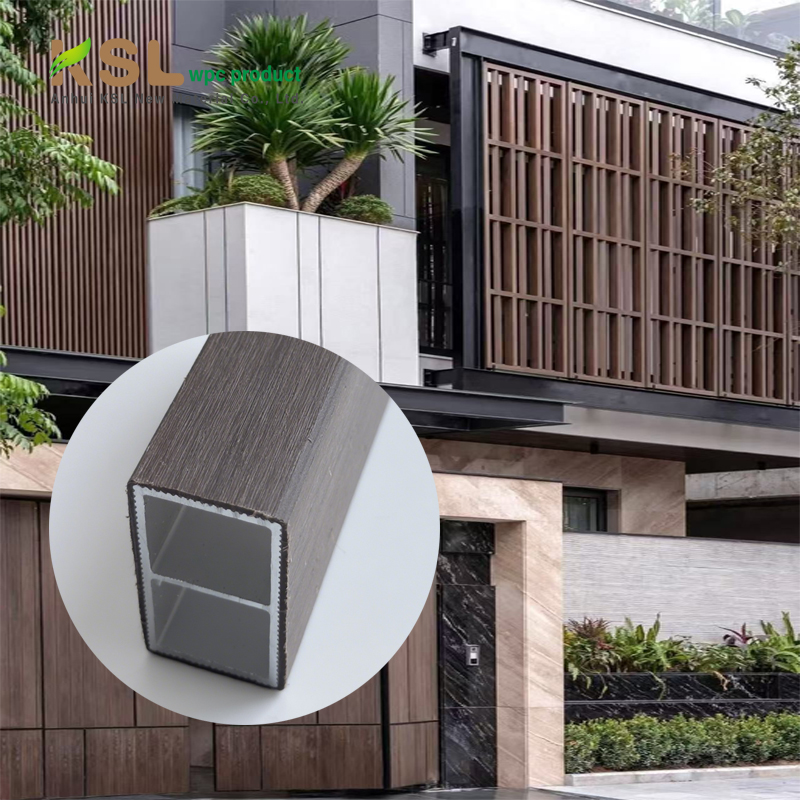
1. Structure and Performance: The Core Competitiveness of Aluminum-Plastic Flooring
Aluminum-plastic flooring achieves molecular-level integration of aluminum alloy and polymer materials through co-extrusion technology, forming a composite structure of "surface functional layer + middle aluminum core layer + bottom buffer layer". This design enables it to achieve multi-dimensional breakthroughs in performance.
The surface layer mostly adopts a PE co-extruded layer or a functional coating. Among them, the fluorocarbon coating has excellent weather resistance, which can withstand strong outdoor ultraviolet radiation and remain non-fading for 20 years; the polyester coating is suitable for indoor scenarios with high cost-effectiveness. Combined with embossing technology, it can not only present realistic textures such as solid wood and stone, but also achieve an anti-slip effect with a friction coefficient of 0.8, significantly improving grip in wet and slippery environments. The middle aluminum core layer is the core of performance. The 1.2mm thickened aluminum alloy, through a honeycomb structure design, not only makes the board density only 2.3g/cm³ (less than 50% of solid wood flooring), but also attenuates more than 40% of sound wave transmission, and absorbs impact loads through elastic deformation. The bottom buffer layer further optimizes the foot feel, avoiding the cold and hard texture of traditional metal flooring and making walking more comfortable.
In terms of basic performance, aluminum-plastic flooring demonstrates the characteristic of "full-scenario adaptability": its waterproof and moisture-proof performance can easily cope with humid environments such as kitchens and bathrooms, avoiding the problem of mildew and deformation of traditional solid wood flooring; the combination of flame-retardant PE core material and metal aluminum layer meets the building fire resistance standards, and its fire safety is significantly better than that of ordinary plastic flooring; the surface anti-pollution coating can be cleaned with only neutral detergent, and the maintenance cost is much lower than that of solid wood flooring. These characteristics together form a solid foundation for the customized development of aluminum-plastic flooring.
2. Customization Dimensions: Full-Scenario Satisfaction from Function to Aesthetics
The customization capability of aluminum-plastic flooring accurately responds to the personalized needs of different scenarios, realizing the dual implementation of functional adaptation and aesthetic expression.
Functional customization allows adjusting structural parameters according to environmental characteristics: for areas with changeable climates such as Panzhihua, the aluminum core layer is thickened to improve the resistance to temperature difference deformation, ensuring structural stability in the environment with heavy rain in summer and dry weather in winter; for extreme scenarios such as yacht decks, the combination of "thickened aluminum core + anti-slip surface layer" is adopted. The application case of the rescue boat of Qingdao Beihai Shipbuilding shows that this customized solution can maintain an anti-slip performance attenuation of less than 5% in a high temperature of 38℃ and a salt spray environment for 6 months; for medical places, antibacterial coated flooring can be customized, and the bacteria inhibition rate of more than 99% is achieved through silver ion technology, which meets the hygiene requirements of high-end medical spaces.
Aesthetic customization covers all dimensions of color, texture and shape: in terms of color, dozens of options such as metallic colors, pearlescent colors and fluorescent colors are available, and personalized presentation of brand logos or artistic patterns can also be realized through color printing; in terms of texture, it can accurately replicate the texture of natural materials such as teak and marble, meeting the high-end aesthetic needs of luxury yachts and the creation of a warm atmosphere in home spaces; in terms of shape, special shapes such as arcs and right angles can be realized through cold bending and cutting processes, adapting to the creative layout needs of exhibition halls and commercial spaces.
The efficiency of the customization process is also worthy of attention: with the help of digital modeling technology, the pavement effect can be visualized in advance. The professional team only needs 7-10 days from scheme design to sample delivery, and the quick-installation buckle system enables a 3-person team to complete the entire yacht flooring pavement in 40 minutes, greatly shortening the construction cycle.
3. In-Depth Scenario Application: Diverse Penetration from Home to Industry
Relying on its customization advantages, aluminum-plastic flooring has been widely used in many fields and has become an important direction for the upgrading of flooring materials.
In home scenarios, it perfectly solves the pain points of traditional materials: anti-slip and waterproof models are selected for kitchens, avoiding the problem of slippery tiles and damp solid wood flooring, and daily cleaning only requires simple wiping; light-colored imitation wood grain models are customized for bedrooms, taking into account the environmental protection and formaldehyde-free characteristics as well as the warm texture, which is especially suitable for families with the elderly and children; for balconies, fluorocarbon-coated models with strong weather resistance can be selected, which can remain bright in color even after long-term exposure to the sun.
Commercial and public spaces highlight its functional value even more: the reception area of the office adopts simple metallic-colored flooring, and seamless pavement is realized through size customization, enhancing the professional image of the enterprise; shops select high-saturation color flooring to create a visual focus and stimulate customers' consumption desire; mobile spaces such as customs patrol boats and luxury RVs achieve dual benefits of 35% hull weight reduction and 5%-8% cruising range improvement through lightweight customization (7.2kg/㎡).
In industrial scenarios, its durability and economy form unique advantages: customized wear-resistant flooring is used in automobile production workshops, which can withstand the rolling of forklifts for 100,000 times without scratches; anti-static models are used in electronic factories, and the surface resistance of 10⁶-10⁹Ω is achieved through carbon fiber doping technology, meeting the production environment requirements of precision electronic components.
4. Market Prospect: Dual Drivers of Quality Upgrade and Demand Explosion
Aluminum-plastic flooring is ushering in dual benefits from policies and the market, and has become a new growth engine in the field of aluminum-plastic customization.
Industry data shows that the global aluminum-plastic panel market scale is expected to exceed 180 billion yuan in 2025. Among them, the profit margin of customized products is 15 percentage points higher than that of standard products. As a core category in the architectural decoration field, aluminum-plastic flooring accounts for 22% of the overall market demand. At the policy level, after the implementation of the new national standard "Aluminum-Plastic Composite Panels for Building Decoration", the strengthening of fire performance and recovery rate indicators has promoted the industry reshuffle, and leading enterprises with customization capabilities have more competitive advantages.
Technological upgrading continues to expand the application boundaries: domestic enterprises account for 62% of the patents in the field of surface treatment technology. Through coating innovation, they have achieved performance leaps in weather resistance and antibacterial properties, gradually breaking the monopoly of overseas enterprises in the high-end market, and the localization rate has increased to 35%. On the consumer side, the superposition of environmental protection and personalized demands has accelerated the replacement of traditional materials by aluminum-plastic flooring. According to the application data of a German yacht group, the full-life-cycle cost of aluminum-plastic flooring is only 58% of that of solid wood flooring, and the annual maintenance cost is reduced by 65%. This cost-performance advantage is promoting the penetration of demand from high-end scenarios to the mass market.
In the future, with the further maturity of co-extrusion technology and the improvement of the digital customization system, aluminum-plastic flooring is expected to make breakthroughs in emerging fields such as new energy vehicle interiors and photovoltaic supporting facilities, becoming a key material connecting home life and high-end manufacturing.